
By the Numbers: Why AI Search Is Leaving Traditional Local Websites Behind
How AI-Optimized Websites Are Driving 320% More Traffic to Local Businesses
By Donna Winter
For years, local business visibility meant one thing: ranking at the top of a search engine results page. If you had a good local SEO strategy, you won the traffic.
But the game is fundamentally changing.
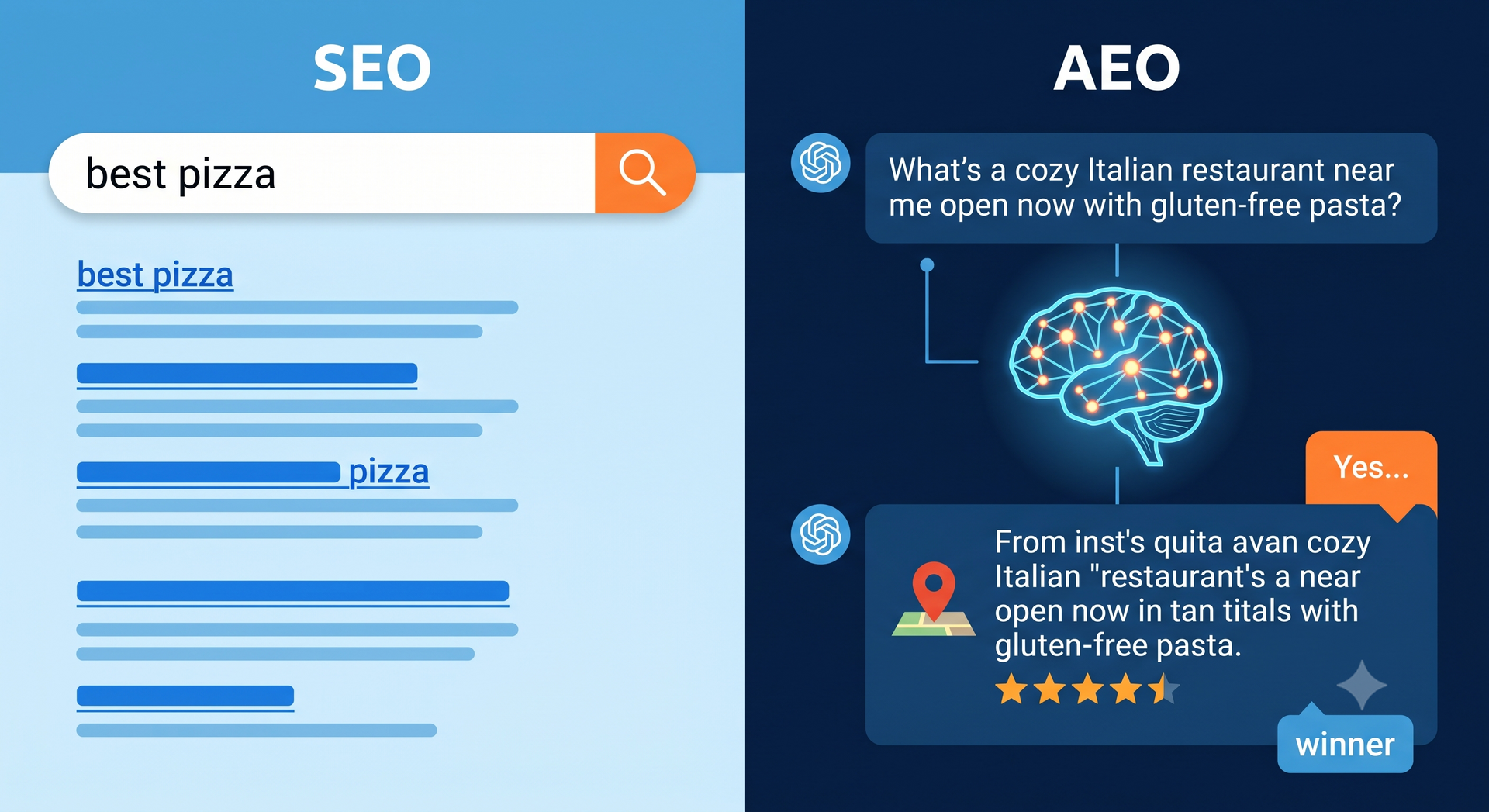
When consumers look for local businesses today, they are increasingly turning to AI-powered search—like ChatGPT or Google’s new AI Overviews. Instead of typing "mechanic," they are asking highly specific questions like,
“What's the best mechanic near me that specializes in hybrid vehicles?” By 2028, AI search is projected to overtake traditional search entirely. This means local businesses need to shift their focus from SEO (Search Engine Optimization) to
AEO (Answer Engine Optimization). The goal is no longer just to be on the page; the goal is to be
the answer.
The ROI of Answer Engine Optimization (AEO)
If you’re wondering whether optimizing your site for AI is worth the investment right now, the data is officially in.
A recent study by our website platform partner, Duda, analyzed over 850,000 websites and 69 million AI crawler visits. They found that local businesses with websites optimized for AI crawlers absolutely dominate their competitors.
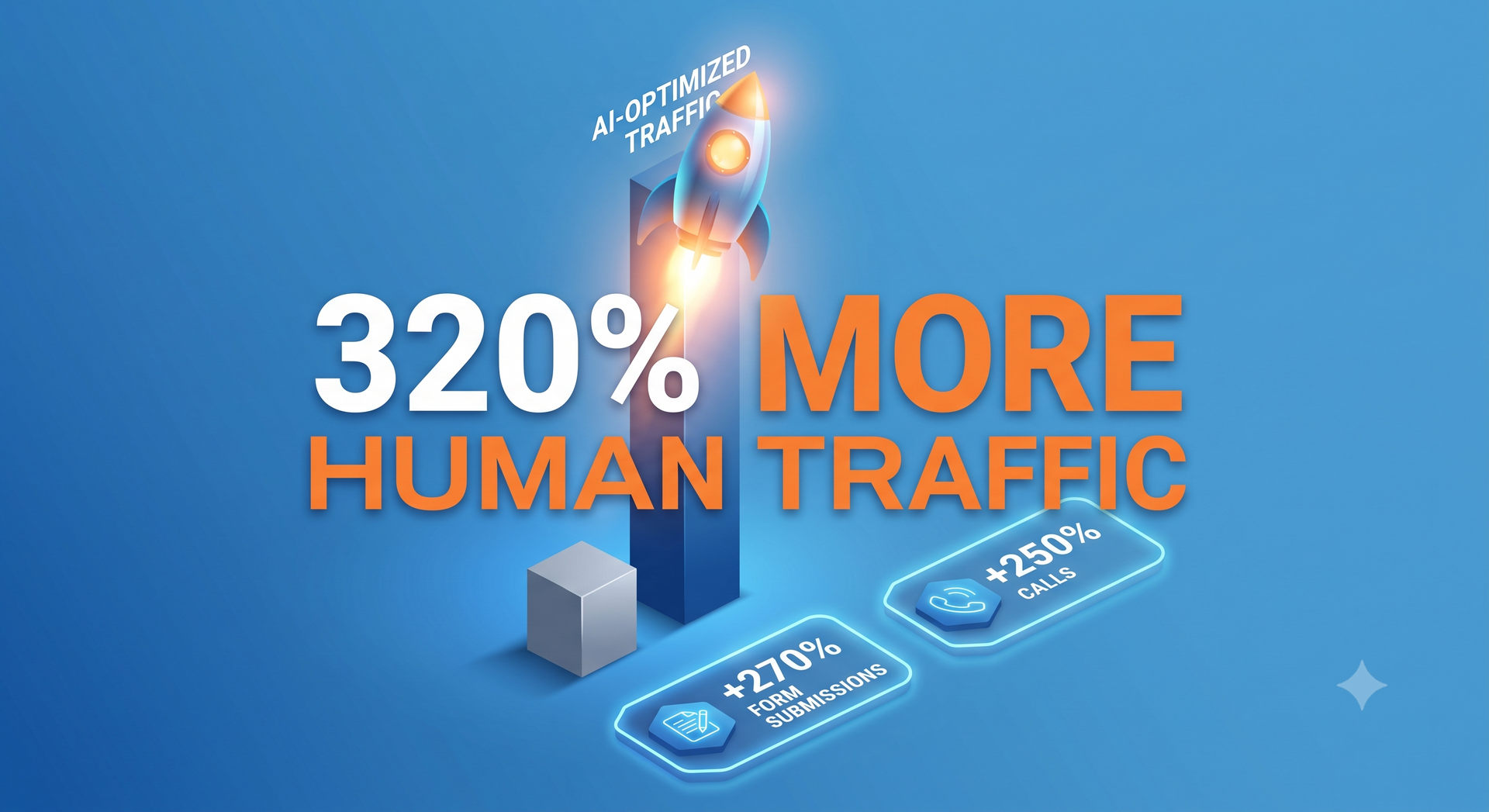
AI-crawled sites generated:
- 320% more human traffic
- 270% more form submissions
- 250% more click-to-call events
The takeaway is clear: local businesses that provide clear, structured, and trustworthy information online are the ones AI platforms are recommending to customers.
5 Tweaks to Make Your Website AI-Ready
You don't need to rebuild your business to win at AEO, but you do need the right digital foundation. Our Tada website platform is set up to maximize your AEO presence with five critical features that the study showed caused a massive 400% increase in AI crawl rates:
1. Maintain an Active Blog
AI engines crave fresh, relevant information. The study found that every single blog post on a site is associated with a 7% increase in AI crawler visits. Regularly answering common customer questions on your blog is one of the best ways to feed Answer Engines.
2. Implement Local Schema Markup
AI doesn't just read your website; it scans the underlying code. Adding "Local Schema" to your site's code explicitly hands search engines your key data—like your exact address, service areas, and operating hours—in a language they instantly understand.
3. Sync Your Google Business Profile (GBP)
AI models cross-reference data to ensure they are giving users accurate information. Synchronizing your website with your Google Business Profile ensures that your business name, address, and phone number are perfectly consistent across the web, building the trust required to be recommended by an LLM.
4. Build Dynamic Service & Location Pages
Lumping all your services or service areas onto a single page confuses AI. Dynamically generating structured, dedicated pages for each specific service or location encourages deeper crawling and allows Answer Engines to match you with highly specific user prompts.

5. Expand Your Site Architecture
A one-page website won't cut it in the age of AI. The depth of your website provides context. The study noted that every additional page added to a website improves performance, yielding a 4% increase in crawler visits per page.
Don't Get Left Behind
Small businesses don't compete with the entire internet; they compete with the shop around the corner. If your competitor’s website is built for Answer Engines and yours isn't, AI will send that 320% traffic boost directly to them.
Ready to future-proof your digital presence? As certified web professionals, we specialize in building high-performance AEO-ready websites equipped with the exact technical foundations AI crawlers are looking for.
Contact us today to audit your current site and start optimizing for the future of search!
Donna Winter (she/her) is Project Development and Marketing Coordinator at Totera Web Systems. She admits to a general obsession with marketing trends and all things new and geeky. She has become increasingly involved in IT ever since the world was slated to end in Y2K. In addition to studying marketing, Donna holds a degree in psychology from the University of Washington. Family, books, music, birding, Scrabble, cards, nature and road trips are a few of her favorite things. She can be reached at donna@totera.com
Share
Additional Articles